Why transparency defines modern treasury
Use this section to make the Transparent Treasury Analytics Market Research decision easier to compare in real life, not just on paper. Start with the reader's actual constraint, then separate must-have requirements from details that are merely nice to have. A practical choice should survive normal use, maintenance, timing, and budget. If a recommendation only works in an ideal situation, call that out plainly and give the reader a fallback path.
The simplest way to use this section is to write down the must-have criteria first, then compare each option against those criteria before weighing nice-to-have features.
Tracking onchain credit and RWA flows
Transparent treasury analytics market research is shifting from static balance sheets to real-time onchain visibility. By tracking tokenized real-world assets (RWAs) and onchain credit, treasurers can see liquidity positions as they move, rather than weeks after the fact.
The integration of traditional debt instruments into blockchain networks creates a new layer of data. Platforms like CME Group now offer analytics for Treasury products, including deliverable baskets and CTD/OTR securities, bridging the gap between futures markets and cash yields [1]. This allows for precise monitoring of inter-commodity spreads and yield curves in a way that was previously impossible for private entities.
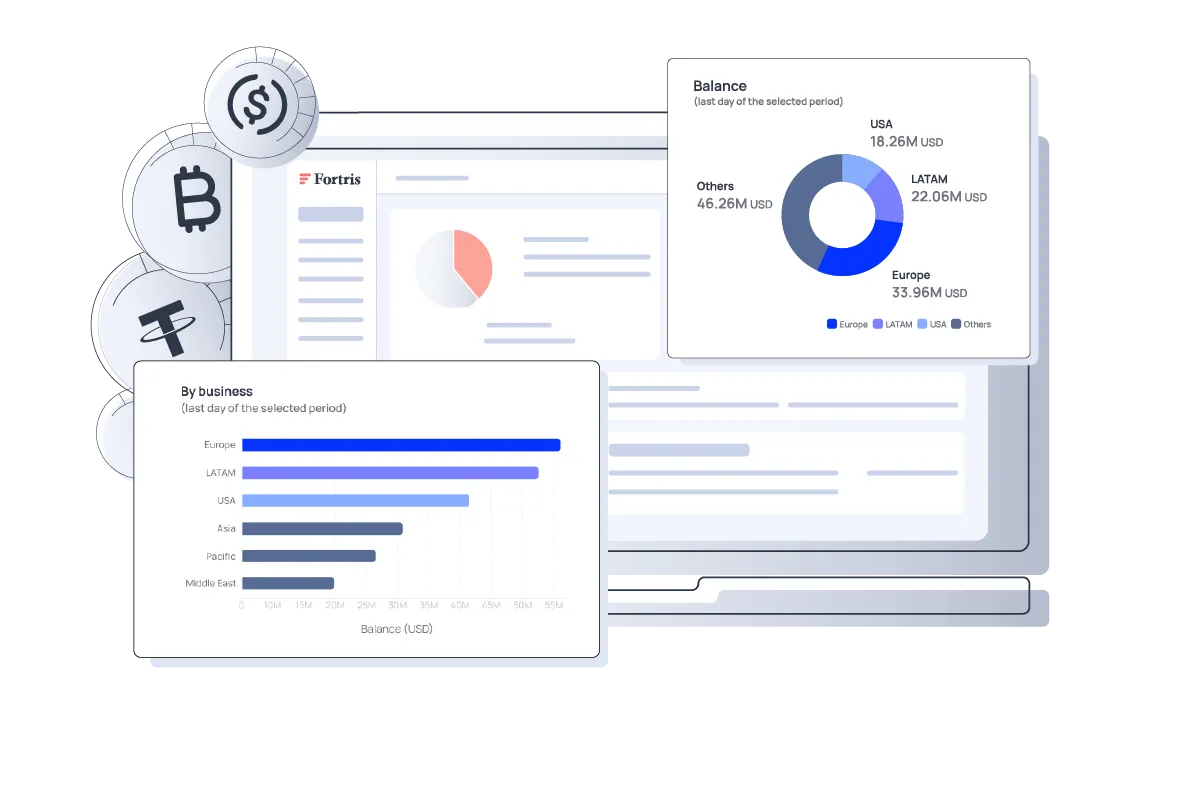
Onchain credit data provides immediate proof of reserves and collateral status. When assets are tokenized, their ownership and movement are recorded on a public ledger. This transparency reduces the reliance on third-party audits and allows treasurers to verify asset backing instantly.
The Office of Financial Research (OFR) has long advocated for better data collection in short-term funding markets, noting that policymakers struggled with data gaps during the Global Financial Crisis [3]. Today, onchain analytics solve this for the digital asset space, offering a standardized, accessible view of liquidity flows that mirrors the OFR's goals for traditional markets.
Using data to manage trade policy risk
Use this section to make the Transparent Treasury Analytics Market Research decision easier to compare in real life, not just on paper. Start with the reader's actual constraint, then separate must-have requirements from details that are merely nice to have. A practical choice should survive normal use, maintenance, timing, and budget. If a recommendation only works in an ideal situation, call that out plainly and give the reader a fallback path.
| Factor | What to check | Why it matters |
|---|---|---|
| Fit | Match the option to the primary use case. | A good deal still fails if it does not fit the job. |
| Condition | Verify age, wear, and service history. | Hidden condition issues erase upfront savings. |
| Cost | Compare purchase price with likely upkeep. | The cheapest option is not always the lowest-cost option. |
Leveraging official financial research data
Use this section to make the Transparent Treasury Analytics Market Research decision easier to compare in real life, not just on paper. Start with the reader's actual constraint, then separate must-have requirements from details that are merely nice to have. A practical choice should survive normal use, maintenance, timing, and budget. If a recommendation only works in an ideal situation, call that out plainly and give the reader a fallback path.
The simplest way to use this section is to write down the must-have criteria first, then compare each option against those criteria before weighing nice-to-have features.
Three mistakes in transparent treasury analytics market research
Treasury data analytics requires connecting disparate sources, from bank statements to cash flow statements, into a single source of truth. When that connection breaks, visibility collapses. CFOs often stumble on three specific errors that turn potential advantages into blind spots.
Relying on stale data
Waiting for batch updates means reacting to yesterday’s liquidity position. Real-time visibility is the baseline for modern treasury operations. If your dashboard is an hour behind the bank, you are already making decisions in the past. Stale data creates a false sense of security while actual exposure shifts. The Office of Financial Research emphasizes that timely, standardized data collection is critical for understanding market stress. Delayed insights prevent you from acting on short-term funding market changes before they become solvency issues.
Ignoring post-trade transparency
Many teams focus heavily on pre-trade forecasting while neglecting post-trade reconciliation. This gap hides settlement failures and liquidity traps until it is too late. The Federal Register has noted the growing need for additional transparency in secondary market transactions to mitigate risk. Without post-trade data, you cannot verify if your cash actually moved as planned. This opacity leaves you vulnerable to operational errors and counterparty risk that only appear after the fact.
Failing to integrate onchain metrics
Traditional treasury stacks often ignore blockchain-based assets or onchain liquidity signals. As digital assets move into mainstream corporate treasuries, ignoring onchain data creates a blind spot in your total balance sheet. You cannot manage what you do not measure. Integrating onchain metrics allows you to track crypto holdings with the same rigor as fiat accounts. This integration ensures that your transparent treasury analytics market research reflects the full scope of your financial ecosystem, not just the traditional banking layer.
Frequently asked questions on treasury analytics
What is treasury analytics?
Treasury analytics is the application of advanced data analysis techniques to monitor, evaluate, and optimize a company’s treasury operations. It combines historical, predictive, and prescriptive insights to improve cash management, the Cash Conversion Cycle, and working capital data analytics [[src-8]].
Why are U.S. Treasuries selling off?
Recent weakness in Treasury prices stems from concerns about demand for U.S. government debt, fiscal considerations, and hedge funds unwinding leveraged trades [[src-serp-8]]. Use our
to track real-time yield movements.How is the OFR used by government?
The Office of Financial Research (OFR) collects and standardizes financial system data to promote stability. It makes this data accessible to policymakers, addressing gaps identified during the Global Financial Crisis [[src-serp-3]].
No comments yet. Be the first to share your thoughts!