
Why transparency drives treasury strategy
The era of opaque legacy systems is ending. For decades, treasury functions operated in silos, relying on batch processes and fragmented data sources that obscured real-time liquidity and risk exposure. This opacity created a significant gap between reported financial health and actual operational reality. As tokenized assets move from experimental pilots to mainstream infrastructure, this gap becomes a liability. Stakeholders, regulators, and counterparties now demand granular visibility into how capital is deployed, secured, and reported.
Transparency is no longer just a compliance checkbox; it is the foundational infrastructure for trust in tokenized markets. When assets are digitized, the ledger itself becomes the source of truth. This shift forces treasury teams to modernize their data strategies. According to JPMorgan, AI-driven data modernization is essential for consolidating fragmented data and enhancing decision-making processes. Without a transparent, unified data layer, organizations cannot effectively leverage the speed and precision that tokenization offers.
The move toward strategic transparency reshapes corporate treasury in 2026. It transforms treasury from a back-office accounting function into a strategic partner that provides real-time insights into cash flow, risk, and opportunity. This clarity allows for more agile capital allocation and stronger stakeholder confidence. As the industry shifts, the organizations that fail to adopt transparent, data-driven frameworks will find themselves unable to compete in an environment where trust is quantified and verified instantly.
Building the data foundation
Transparent treasury analytics starts with a single, unified view of your financial position. You cannot measure what you cannot see, and fragmented data silos are the primary obstacle to real-time visibility. Modernizing your treasury infrastructure requires moving away from manual reconciliation toward automated, AI-driven consolidation.
The goal is to create a "golden source" of data—a single version of the truth that updates continuously. As noted by HSBC, the quality of this data is often inconsistent across legacy systems, making consolidation a complex but necessary step. JPMorgan Chase emphasizes that AI-driven modernization strategies are essential for transforming these fragmented inputs into coherent decision-making processes. By centralizing data, you reduce the risk of errors and gain the ability to react to liquidity shifts as they happen, rather than days later.
This technical shift supports more than just reporting; it enables predictive modeling and scenario planning. When your data infrastructure is robust, you can simulate the impact of market volatility or regulatory changes with greater accuracy. This level of transparency is not just a technical upgrade; it is a strategic advantage that allows treasury teams to operate with confidence in a high-stakes environment.
Managing trade policy and FX risk
Trade policy shifts and currency fluctuations don’t wait for your next quarterly review. When tariffs change overnight or a central bank pivots, your treasury needs to see the impact immediately, not after the fact. Transparent analytics provide that visibility, turning raw data into a clear picture of your exposure.
The difference between traditional reporting and modern analytics is stark. Legacy systems often rely on static, backward-looking reports that struggle to model complex, multi-currency scenarios. Transparent analytics, by contrast, offer real-time simulation capabilities. They allow finance leaders to stress-test their portfolios against hypothetical policy changes—such as a sudden 10% tariff on key imports—and see the immediate effect on cash flow and liquidity.
This shift from reactive to proactive risk management is critical for maintaining stability in a volatile global market. By integrating real-time FX data with trade policy scenarios, you can make informed decisions about hedging strategies and supply chain adjustments before the market moves against you.
| Feature | Traditional Treasury Reporting | Transparent Analytics-Driven Reporting |
|---|---|---|
| Data Latency | End-of-day or monthly batches | Real-time streaming |
| Scenario Modeling | Limited, manual spreadsheets | Automated, dynamic simulations |
| FX Exposure View | Static, historical snapshots | Live, predictive risk metrics |
| Policy Impact | Not integrated | Integrated with trade policy data |
| Feature | Traditional Treasury Reporting | Transparent Analytics-Driven Reporting |
|---|---|---|
| Data Latency | End-of-day or monthly batches | Real-time streaming |
| Scenario Modeling | Limited, manual spreadsheets | Automated, dynamic simulations |
| FX Exposure View | Static, historical snapshots | Live, predictive risk metrics |
| Policy Impact | Not integrated | Integrated with trade policy data |
Tokenized assets and onchain credit
The shift toward tokenized real-world assets (RWA) is no longer theoretical. Major financial institutions like JPMorgan and CME Group are actively piloting tokenized treasuries and credit instruments, moving these assets from experimental ledgers to core treasury infrastructure. This transition demands a transparent analytics strategy that can track ownership, liquidity, and risk in real time.
Tokenized assets offer immediate visibility into asset movement, but they also introduce new complexity. Unlike traditional bonds, tokenized instruments often settle on-chain, creating a permanent, public record of transactions. This transparency reduces counterparty risk but requires treasury teams to monitor on-chain activity with the same rigor as off-chain bank accounts. The U.S. Treasury Department’s strategic plan for 2022–2026 emphasizes increasing the quality and sharing of financial data to promote accountability, a principle that now applies directly to digital asset holdings.
Onchain credit monitoring is the other half of this equation. As private credit and commercial real estate loans become tokenized, treasury leaders must verify the underlying collateral and borrower status without relying on opaque third-party reports. Transparent analytics allow teams to see exactly when a loan is issued, when payments are made, and when collateral is liquidated. This level of detail is essential for high-stakes financial decisions where traditional reporting lags by days or weeks.
The market for these instruments is growing, reflected in the broader digital asset ecosystem. Understanding the price action and volume of related crypto assets helps treasuries gauge market sentiment and liquidity depth.
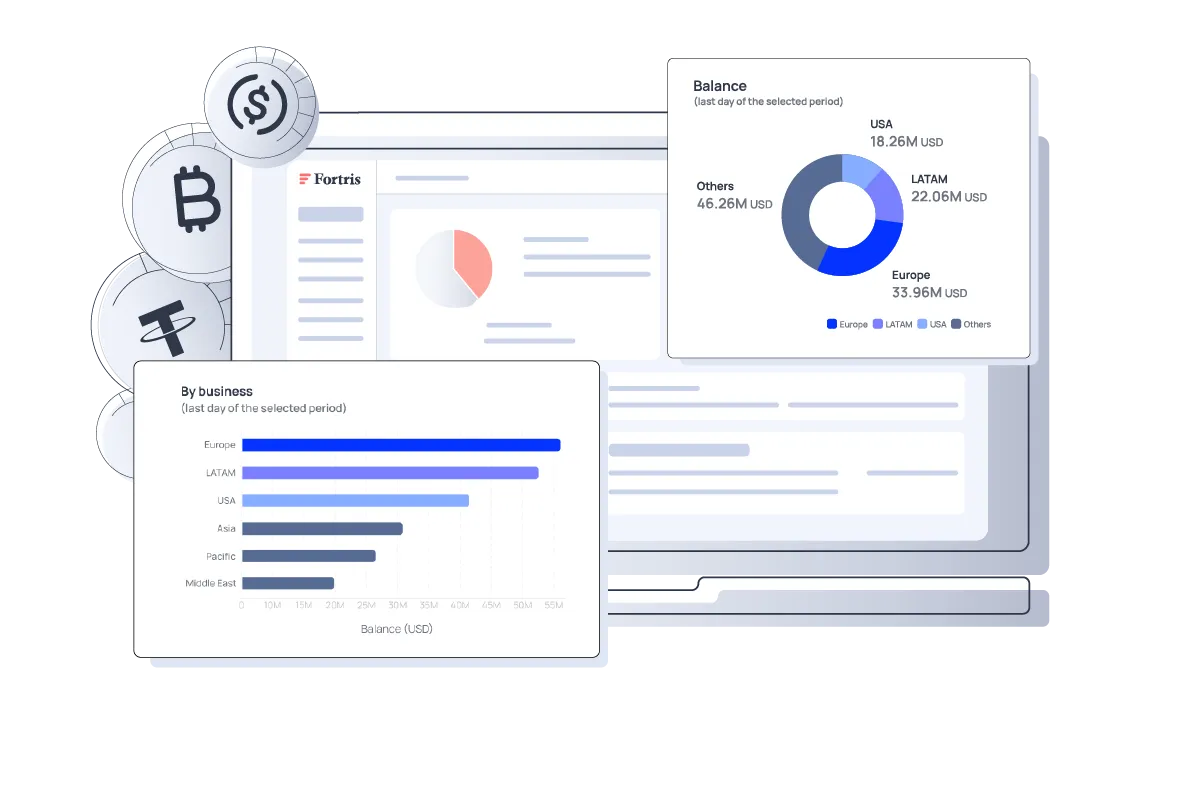
To manage this effectively, treasury teams must integrate on-chain data feeds into their existing analytics platforms. This integration ensures that tokenized assets and onchain credit positions are reported alongside traditional holdings, providing a single source of truth. Without this unified view, the benefits of transparency are lost in fragmented data silos. The goal is not just to hold these assets, but to understand them with the same clarity as cash in the bank.
Common questions about treasury transparency
Implementing a transparent treasury strategy requires more than just upgrading software; it demands a shift in how data governance and regulatory reporting are handled. CFOs and treasury leaders often face specific hurdles regarding data quality, the role of AI, and compliance with evolving standards. Below are the most frequent questions regarding the practical implementation of these systems.
Visualizing the data architecture
To truly grasp the operational shift from legacy silos to unified transparency, it is helpful to visualize the underlying data flow. The following chart illustrates how disparate banking feeds, on-chain transaction logs, and internal ERP systems converge into a single analytics layer, enabling the real-time visibility discussed throughout this article.
No comments yet. Be the first to share your thoughts!