The shift to onchain treasury visibility
Traditional treasury management has long been defined by opacity. Corporate and sovereign treasuries rely on siloed bank statements, delayed SWIFT messages, and quarterly reconciliations. This legacy infrastructure creates a lag between when value moves and when it is accounted for. This latency is a fundamental flaw for tokenized real-world assets (RWA). It prevents the kind of real-time liquidity management that blockchain technology promises to enable.
Onchain treasury analytics replace this delayed reporting with continuous, immutable visibility. When treasury operations are recorded on-chain, every transaction is timestamped and verifiable by anyone with access to the ledger. This transparency allows stakeholders to monitor asset backing, cash flows, and exposure in real time. It shifts the paradigm from "trust and verify" to "verify and trust."
This shift is not just about technology; it is about risk mitigation. In high-stakes finance, the cost of information asymmetry is high. Onchain analytics provide a single source of truth that reduces counterparty risk and enhances operational efficiency. As the financial system increasingly integrates with blockchain networks, the ability to see the full picture of treasury operations becomes a competitive advantage.
The integration of onchain analytics with traditional finance is already underway. Agencies like the U.S. Department of the Treasury are exploring data transparency initiatives to improve access to federal financial data, signaling a broader industry move toward openness. Similarly, private sector players are developing advanced treasury analytics to monitor and optimize operations using real-time data streams. This convergence of traditional finance and blockchain technology is creating a new standard for treasury management.
For investors and institutions, this transparency means greater confidence. They can verify the health of a treasury without relying on third-party audits or delayed reports. This level of scrutiny is essential for the mass adoption of tokenized assets, where trust is established through code and data rather than institutional reputation alone.
Building the Transparent Treasury Analytics Infrastructure
Transparent treasury analytics requires a bridge between legacy banking data and immutable onchain records. CFOs and treasury managers cannot rely on fragmented spreadsheets or delayed bank confirmations. Instead, they need a system that ingests offchain cash flows, verifies them against official sources, and maps the results to tokenized RWA in real time.
This infrastructure rests on three technical and operational layers. First, data aggregation pulls raw information from bank APIs and financial reporting systems. Second, cryptographic verification ensures that the offchain data matches the onchain token supply. Third, analytics engines process this data to provide live visibility into liquidity, yield, and exposure.
1. Ingesting Offchain Treasury Data
The foundation is secure data ingestion. Systems must connect to major banking providers to pull statements, cash flow records, and balance sheet data. This process often involves API integrations with providers like Kyriba or direct bank feeds that standardize formats for analysis. The goal is to eliminate manual entry errors and create a single source of truth for cash positions.
2. Verifying Asset Backing
Once data is ingested, it must be verified. This is where onchain transparency meets offchain reality. Smart contracts or oracle networks verify that the tokenized assets are fully backed by the underlying treasury holdings. This step often involves checking against official benchmarks, such as the Cheapest to Deliver (CTD) securities identified by CME Group analytics, to ensure accurate valuation and delivery flexibility.
3. Mapping to Onchain Tokens
The final layer maps the verified treasury data to onchain tokens. Each token represents a fractionalized claim on the underlying asset, such as a Treasury bill or corporate bond. The mapping must be auditable, allowing investors to trace the token back to the specific bank account or security it represents. This creates a transparent ledger that updates as cash flows change.
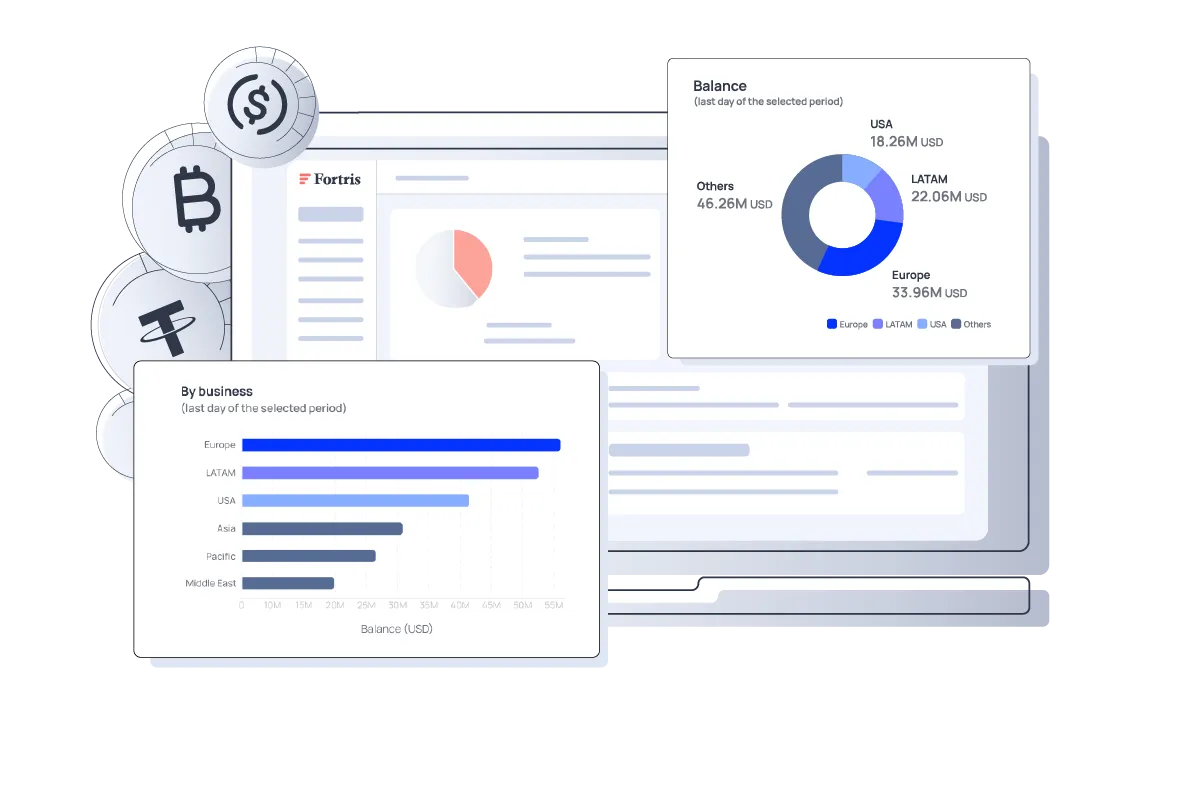
Establish secure API connections to banking partners. Automate the pull of daily statements and transaction logs to ensure data freshness. This step reduces latency and prevents reconciliation gaps between internal records and external bank data.
Use oracle networks to bridge offchain data to the blockchain. Oracles fetch verified treasury balances and feed them into smart contracts. This ensures that the token supply accurately reflects the actual cash or securities held in custody, maintaining trust without centralized intervention.
Mint tokens that represent fractional ownership of the verified treasury assets. Distribute these tokens to investors or internal wallets. The onchain ledger now serves as the primary record for ownership, yield distribution, and liquidity, accessible to all authorized parties in real time.
The market for these instruments is growing rapidly, driven by the need for greater liquidity in traditionally static assets. Investors are increasingly looking at Treasury ETFs and bond futures as benchmarks for performance and stability.
This infrastructure transforms treasury management from a backward-looking accounting exercise into a forward-looking, data-driven strategy. By anchoring onchain tokens to verified offchain data, organizations can unlock new levels of transparency and efficiency in their financial operations.
Applying analytics to tokenized real-world assets
Transparent treasury analytics serve as the bridge between traditional finance and tokenized real-world assets. By bringing on-chain visibility to off-chain value, these tools allow investors and issuers to assess the true health of underlying collateral. This transparency directly influences valuation, risk assessment, and liquidity, transforming how digital securities are traded and managed.
Comparing traditional vs. tokenized RWA structures
The shift from traditional RWA investment structures to tokenized models fundamentally changes the mechanics of settlement and oversight. Traditional markets often suffer from fragmented data and delayed reporting, whereas tokenized assets leverage distributed ledger technology to provide real-time visibility. This structural difference reduces counterparty risk and enhances operational efficiency.
The table below contrasts these two approaches across key operational metrics, highlighting the advantages of on-chain transparency.
| Metric | Traditional RWA | Tokenized RWA |
|---|---|---|
| Settlement Time | T+2 or longer | Near-instant (T+0) |
| Transparency Level | Post-trade (delayed) | Real-time on-chain |
| Minimum Investment | High ($100k+ typical) | Low (fractional) |
| Audit Trail | Centralized records | Immutable ledger |
Market impact and liquidity
The introduction of transparent treasury analytics has immediate effects on market liquidity. When investors can verify the underlying assets in real-time, the perceived risk premium decreases. This dynamic is particularly relevant in the U.S. Treasury market, where recent regulatory moves by FINRA to enhance post-trade transparency have already begun to raise the standard for market integrity.
For tokenized treasuries, this transparency is baked into the protocol. Investors do not need to rely on periodic reports; they can verify the collateral backing the token at any moment. This reduces the friction typically associated with alternative investments, making tokenized RWA more accessible to a broader range of participants.
To understand how these assets perform in live markets, it is essential to monitor the underlying benchmarks. The performance of tokenized treasuries often tracks closely with traditional U.S. Treasury yields, but with added liquidity benefits.
Risk assessment through on-chain data
Risk assessment in tokenized RWA strategies is no longer a black box. Transparent treasury analytics allow for continuous monitoring of collateral quality and issuer solvency. This real-time data feed helps mitigate the risk of default and provides early warning signals for market stress.
As the market for tokenized assets matures, the integration of these analytics will become standard practice. Investors who prioritize transparency will find tokenized RWA to be a more reliable and efficient vehicle for accessing real-world value.
Navigating onchain credit risks and compliance
Onchain credit is not just about code; it is about regulatory reality. When you tokenize RWA or build transparent treasury analytics, you are moving traditional financial obligations into a public ledger. This shift demands a higher standard of proof. You cannot rely on opaque off-balance-sheet accounting. You must verify data integrity through official sources that have the authority to monitor market stability.
The New York Fed and the Treasury Department treat market surveillance as a core function, not an afterthought. Their white papers on data availability emphasize that transparency is the only way to ensure fair and orderly markets. For onchain credit to be viable, your treasury analytics must mirror this level of scrutiny. If your data sources are not auditable by these official bodies, your credit risk models are essentially guessing.
To illustrate the market conditions driving this need for transparency, consider the current performance of the primary asset class in question.
This widget shows real-time yields for the 10-year U.S. Treasury. These yields are the benchmark for risk-free rates. When you analyze onchain credit, you are comparing tokenized yields against this live, official benchmark. Any deviation must be explainable through data, not speculation. The NY Fed’s monitoring of these flows helps identify when onchain leverage might destabilize traditional markets.
Compliance in this space means your treasury analytics must be able to answer one question: "Can this position be verified by the Treasury?" If the answer is no, you are taking on unnecessary regulatory risk. The goal is to make your onchain treasuries as transparent and verifiable as the government bonds they represent.
Key questions on treasury data transparency
Understanding how onchain data intersects with traditional treasury mechanics is essential for accurate valuation and risk management. Below are answers to the most common technical questions regarding treasury analytics and futures delivery.
No comments yet. Be the first to share your thoughts!