Why transparency matters in treasury analytics
Treasury management has long operated in the shadows. Traditional systems relied on batch processing, siloed data, and end-of-day reconciliations that left finance leaders blind to real-time exposure. This opacity wasn't just an inefficiency; it was a compliance risk. When regulators demand to see the provenance of funds and the accuracy of credit positions, legacy spreadsheets simply cannot deliver the granular, immutable audit trail required.
The shift toward onchain-driven analytics is not merely a technological upgrade; it is a regulatory imperative. As highlighted by FINRA's recent enhancements to post-trade transparency in the U.S. Treasury securities market, the industry is moving toward disseminating individual transaction data to raise the overall level of market visibility [src-serp-5]. This move mirrors the pressure on corporate treasuries to automate regulatory adjustments and ensure proper documentation of trade-related transactions to maintain compliance [src-serp-2].
In this new environment, "transparency" means more than just seeing balances. It means having a single source of truth where every asset movement is recorded instantly. For legal and compliance teams, this eliminates the guesswork in risk reporting. When treasury analytics are built on transparent, onchain infrastructure, the distinction between operational data and regulatory evidence disappears. You are no longer preparing for an audit; you are living in a state of continuous, verifiable compliance.
The stakes are high. Without this level of transparency, organizations face not only regulatory penalties but also a loss of trust from investors and counterparties who demand proof of solvency and operational integrity. Onchain analytics provide that proof, turning treasury operations from a black box into a clear, accountable, and compliant engine.
Core metrics for onchain treasury health
Transparent treasury analytics moves beyond simple balance sheet snapshots. It requires tracking specific KPIs that reveal the true liquidity position of an entity. For legal and regulatory audiences, these metrics provide the audit trail necessary to verify solvency and compliance in real-time.
The foundation is cash visibility. This measures the percentage of total treasury assets that are immediately identifiable and accessible on-chain. Low visibility creates regulatory risk, as hidden or fragmented assets can obscure true leverage. When combined with forecast error metrics, visibility allows operators to predict shortfalls before they occur.
Forecast error tracks the deviation between predicted cash flows and actual on-chain movements. In volatile crypto markets, this metric is critical for maintaining funding buffers. A high forecast error suggests that treasury models are disconnected from market reality, increasing the risk of insolvency during sudden liquidity crunches.
Funding buffers act as the final safety net. These are reserved assets, often in stablecoins or liquid collateral, set aside to meet unexpected obligations. Tracking the size of these buffers relative to total liabilities provides a clear health indicator. It answers the fundamental question: can the treasury meet its immediate debts without forced asset sales?

These metrics are not static. They must be updated continuously as on-chain transactions occur. Regulatory bodies are increasingly looking for these specific data points when evaluating the stability of digital asset custodians and treasury operators. Without them, transparency is merely a claim, not a verifiable fact.
Tokenized RWA Infrastructure
The infrastructure required to track tokenized real-world assets (RWA) and onchain credit relies on a convergence of traditional financial data feeds and blockchain oracles. For legal and regulatory audiences, the primary concern is not just the token's existence, but the integrity of the data proving the underlying asset's status. This transparency is embedded directly into the protocol layer through standardized reporting mechanisms that bridge off-chain legal structures with on-chain smart contracts.
Oracle Feeds and Data Provenance
At the core of this infrastructure are oracle networks that fetch, verify, and transmit off-chain data to the blockchain. These feeds must maintain a clear audit trail to satisfy compliance requirements. When tracking onchain credit, the oracle does not merely report a price; it verifies the collateralization ratio, the health of the borrower, and the current legal standing of the underlying asset. This data provenance is critical for distinguishing between a tokenized asset and a synthetic derivative.
Standardized Reporting Protocols
To ensure interoperability and regulatory clarity, the industry is moving toward standardized reporting protocols. These protocols define how asset states—such as ownership, lien status, and yield accrual—are encoded on-chain. By adhering to these standards, developers can create dashboards that provide real-time visibility into the treasury's composition. This eliminates the need for manual reconciliation between off-chain legal documents and on-chain balances.
The Role of Clearing and Settlement
The final layer of infrastructure involves clearing and settlement mechanisms. As highlighted by industry bodies like SIFMA and EY, the transition to central clearing introduces new compliance considerations for tokenized assets. These mechanisms ensure that when a tokenized RWA is transferred, the corresponding legal rights are also transferred in a manner that is both legally binding and technologically verifiable. This integration of legal and technical settlement is what makes onchain credit tracking possible.
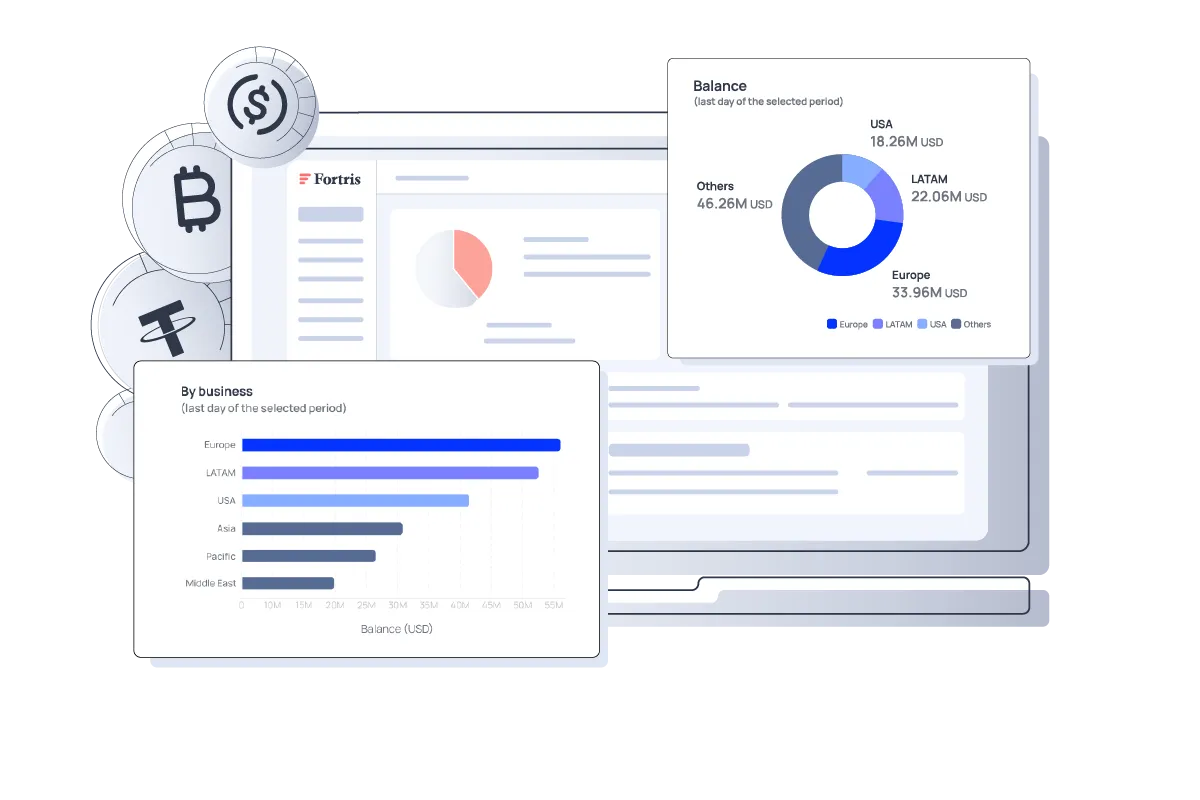
Market Context: Treasury Analytics
The complexity of tracking these assets is mirrored in the broader treasury analytics market. Tools like those provided by CME Group demonstrate the industry's focus on deliverable baskets and implied yields. For tokenized RWAs, this level of granularity is essential for understanding the true value and risk profile of the underlying collateral.
Comparing analytics platforms and tools
Choosing the right treasury analytics platform requires looking past marketing claims and examining how each tool handles onchain credit data and RWA infrastructure. The goal is to find a solution that provides transparent reporting without creating new data silos. We evaluated leading options based on their ability to integrate with existing treasury systems and their specific features for tracking digital asset exposures.
The following table breaks down the core capabilities of major providers. Use this as a baseline for your technical evaluation, focusing on which features align with your regulatory reporting requirements.
| Platform | Integration Type | RWA Support | Regulatory Reporting |
|---|---|---|---|
| SAP S/4HANA | ERP Native | Limited/Custom | Standard |
| BlackRock Aladdin | API/Cloud | Advanced | Comprehensive |
| Coinbase Prime | API | Onchain Native | Transaction-Level |
| Chainalysis | API/Web | Onchain Native | Compliance-Focused |
SAP S/4HANA remains the default for many large enterprises due to its deep ERP integration, but it often requires custom development to interpret onchain data accurately. BlackRock’s Aladdin offers sophisticated risk modeling for traditional assets and is expanding into RWA, though its onchain transparency features are less granular than specialized crypto-native tools. For organizations prioritizing direct onchain visibility, Coinbase Prime and Chainalysis provide more immediate access to transaction-level data, which is essential for demonstrating control to auditors.
When evaluating these platforms, prioritize those that allow you to export data in formats compatible with your internal audit trails. As noted in industry guides, the right technology helps treasury departments demonstrate control and show they are meeting internal corporate and external rules and regulations with full security.
Navigating regulatory compliance and risk
Treasury analytics is no longer just about efficiency; it is a primary defense against regulatory scrutiny. As central banks and financial regulators demand greater visibility into market structures, the ability to track onchain credit and Real World Asset (RWA) infrastructure in real time becomes a compliance necessity rather than a luxury.
The regulatory landscape is shifting toward mandatory transparency. The Federal Reserve has actively sought public comment on additional transparency for secondary market transactions, signaling that opaque trading practices are no longer sustainable for institutional treasuries [src-serp-6]. Simultaneously, industry bodies like SIFMA and EY have published detailed compliance considerations for the transition to central clearing, highlighting the operational rigor required to meet new standards [src-serp-7].
Transparency aids in meeting these requirements by providing an immutable audit trail. When treasury operations are tracked onchain, every transaction is timestamped and verifiable. This reduces the risk of regulatory penalties stemming from reporting errors or delayed disclosures. For treasuries managing high-stakes assets, the cost of non-compliance far exceeds the investment in robust analytics infrastructure.
To ensure your treasury analytics meet these evolving compliance standards, consider the following checklist:
- Verify that all onchain transactions are linked to verifiable off-chain identity records.
- Ensure real-time reporting capabilities align with current regulatory deadlines.
- Audit smart contract logic for any potential loopholes that could obscure asset ownership.
- Maintain separate, immutable logs for audit purposes, distinct from operational data.
Frequently asked questions about treasury analytics
Treasury analytics has moved beyond simple cash visibility. It now sits at the intersection of traditional liquidity management and emerging onchain infrastructure. These questions clarify how modern tools track credit risk and real-world assets (RWA) in real time.
No comments yet. Be the first to share your thoughts!