What transparent treasury analytics means
Transparent treasury analytics is the practice of making treasury data visible, verifiable, and auditable in real time. Traditional treasury data analytics relies on advanced data analysis techniques to monitor and optimize corporate treasury operations, focusing on cash management and working capital efficiency. However, in the context of tokenized real-world assets (RWA), transparency takes on a different dimension: it refers to the onchain verifiability of underlying collateral and credit risk.
When treasury data moves onchain, it is no longer siloed in private enterprise resource planning (ERP) systems. Instead, it becomes part of a public ledger where every transaction, balance, and liability can be traced. This shift from opaque, periodic reporting to continuous, onchain visibility is the primary differentiator for credit markets. Lenders and investors can now assess risk based on live data rather than lagging financial statements.
This level of transparency transforms how credit is underwritten. Instead of relying on historical audits, platforms can use real-time treasury metrics to price risk dynamically. For tokenized assets, this means the integrity of the treasury is not just a matter of trust but of mathematical proof. The result is a more efficient market where capital flows to borrowers based on verifiable liquidity rather than reputation alone.
Tracking tokenized RWA yields onchain
Verifying the yield generation of tokenized real-world assets requires moving beyond the black box of traditional finance. In opaque legacy structures, investors often wait for quarterly statements to confirm that underlying treasury bills or bonds are performing as promised. Onchain tokenized treasuries replace this lag with real-time transparency, allowing you to audit the flow of value directly from the smart contract to the wallet.
The core of this verification lies in tracking the onchain distribution of interest. Unlike traditional funds where yield is pooled and distributed at the discretion of a custodian, tokenized RWAs typically record every interest payment as a distinct onchain event. By monitoring these transactions, you can confirm that the yield matches the current market rate of the underlying asset, such as a US Treasury bill, without relying on third-party reports.
To understand how this transparency contrasts with traditional methods, consider the differences in data availability and settlement speed. The table below highlights the operational distinctions between legacy treasury products and their onchain tokenized counterparts.
| Feature | Traditional Treasury | Tokenized RWA |
|---|---|---|
| Yield Verification | Quarterly statements | Real-time onchain events |
| Settlement Time | T+1 or T+2 | Near-instant (block finality) |
| Data Transparency | Limited (custodian reports) | Public ledger (block explorer) |
| Counterparty Risk | High (intermediaries) | Reduced (smart contract code) |
This shift from periodic reporting to continuous verification changes how you assess risk. You are no longer trusting a promise; you are observing the mechanics of the yield itself. This clarity is essential for high-stakes treasury management, where liquidity and accuracy are paramount.
To see this correlation in action, observe the price and yield movement of a relevant Treasury ETF, such as the iShares 1-3 Year Treasury Bond ETF (SHY). The chart below demonstrates how onchain tokenized products track these underlying benchmarks with minimal deviation, providing a clear signal of performance.
Assessing onchain credit risk signals
Onchain tokenized treasuries transfer traditional credit risk into a transparent, code-driven environment. Evaluating these assets requires shifting focus from opaque issuer balance sheets to observable onchain mechanics. You must verify that the underlying assets remain solvent, the smart contracts are secure, and the liquidity is sufficient to handle redemptions without slippage.
Liquidity depth and redemption mechanics
Liquidity is the primary defense against credit events in tokenized markets. Unlike traditional funds, tokenized treasuries often rely on onchain liquidity pools or designated redemption windows. If the pool is thin, a single large redemption can trigger significant price deviation, effectively becoming a liquidity crisis that mimics a credit default.
Monitor the ratio of token supply to locked treasury assets. A healthy protocol maintains a 1:1 backing ratio with minimal deviation. Use a
to track the price stability of the tokenized share against the underlying ETF. Persistent deviations from the net asset value (NAV) signal liquidity strain or settlement friction.Smart contract audits and code risk
The smart contract acts as the custodian of the treasury. Even if the underlying US Treasuries are secure, a vulnerability in the minting or redemption logic can lead to total loss of funds. Audits provide a baseline of security, but they are not a guarantee of future safety. Look for protocols that have undergone multiple audits from reputable firms and maintain a bug bounty program.
Pay attention to the "time to market" versus "security" trade-off. Rapidly deployed contracts often skip thorough stress testing. Ensure the protocol has a clear upgrade mechanism that is governed by a transparent multisig or DAO, preventing any single entity from altering the risk parameters unilaterally.
Off-chain issuer health and legal structure
Onchain analytics are useless if the off-chain legal structure is flawed. The entity holding the actual treasury bills must be financially stable and legally distinct from the protocol operators. Check the issuer’s credit rating and regulatory compliance status. If the issuer faces bankruptcy or regulatory action, the onchain tokens become claims against a distressed estate.
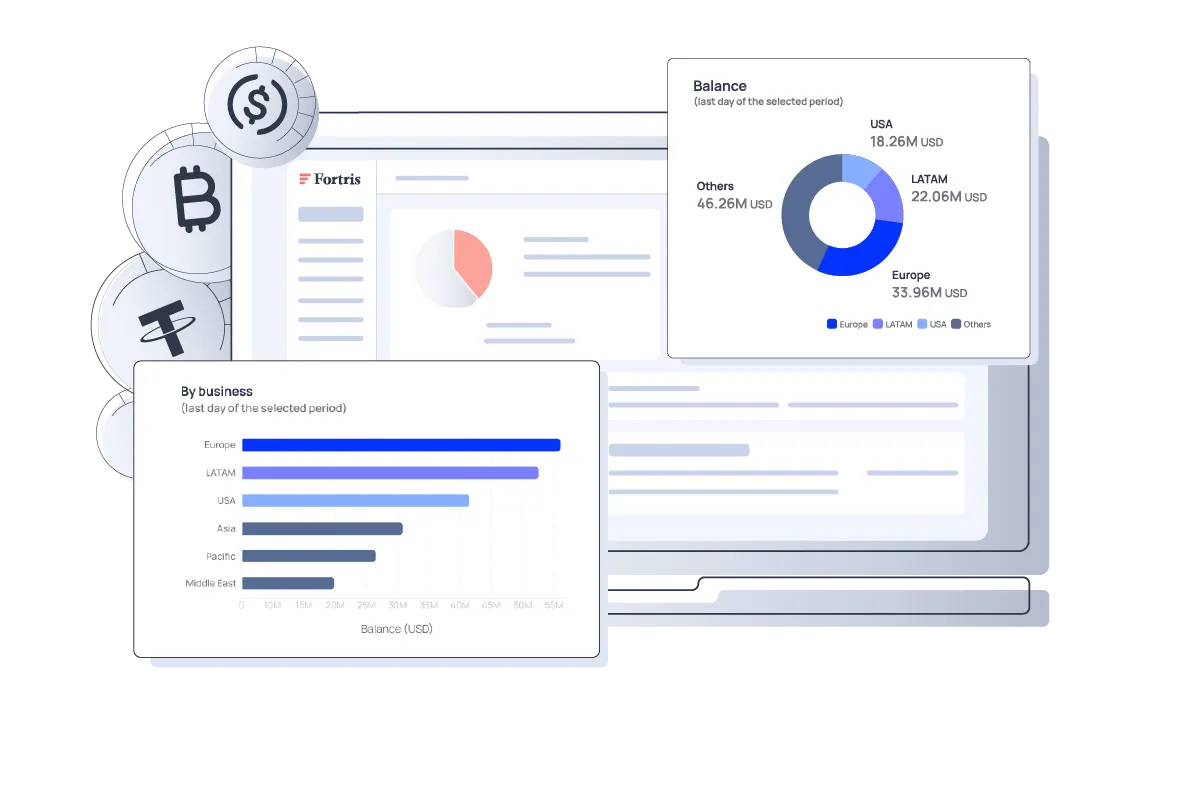
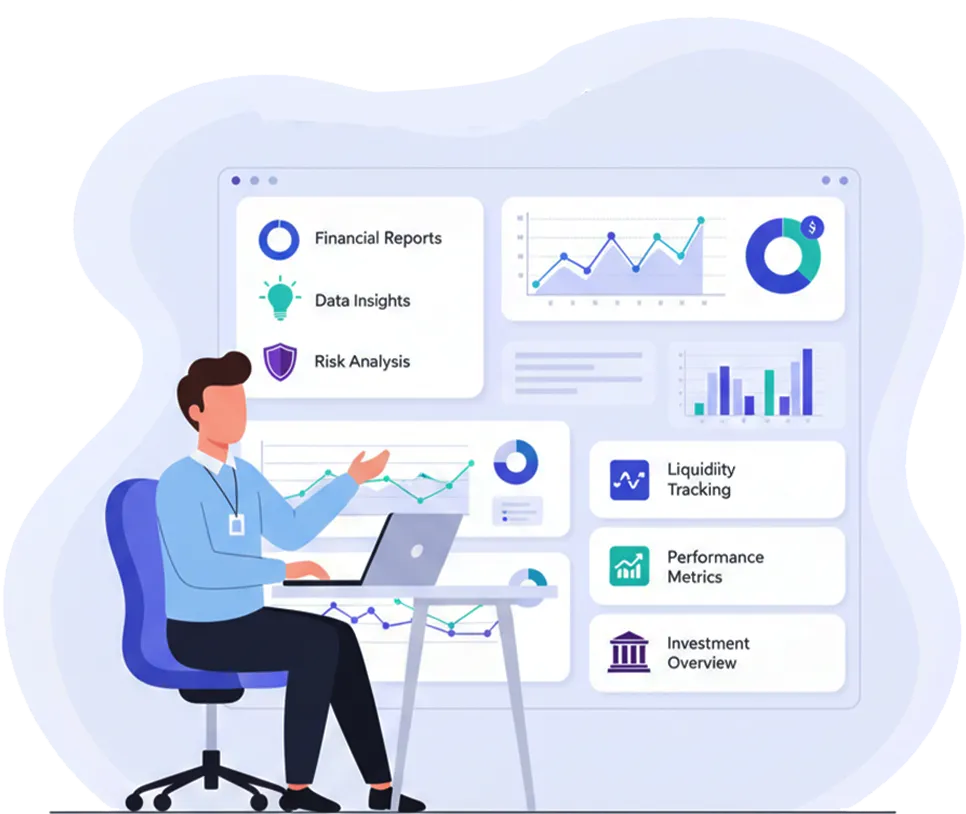
Transparent treasury analytics should include a dashboard view of the off-chain entities. The image below illustrates how modern treasury management systems integrate these off-chain and onchain data points into a single view, allowing finance leaders to monitor both cash flow forecasting and risk exposure simultaneously.
Comparing risk metrics: Traditional vs. Onchain
Traditional treasury funds rely on quarterly reports and credit agency ratings. Tokenized treasuries offer real-time visibility into asset composition and holder behavior. This shift allows for more granular risk assessment but requires a different analytical toolkit.
Build a transparent treasury strategy
Treasury analytics is no longer an IT side project; it is the discipline that connects historical data with predictive cash flow models. For finance leaders, building a transparent treasury strategy means moving beyond static spreadsheets to systems that offer real-time visibility into working capital and liquidity.
The goal is to integrate these insights directly into your treasury management system (TMS). When analytics are embedded rather than bolted on, you gain the ability to forecast cash positions with greater certainty and respond to market shifts instantly. This transparency reduces the friction between treasury operations and broader financial planning.
Step 1: Define the Scope and Objectives
Start by identifying the specific treasury metrics that matter most to your organization. Whether it is optimizing the Cash Conversion Cycle or improving working capital visibility, clear objectives prevent data overload. Focus on outcomes like reduced manual reconciliation or faster decision-making cycles. This clarity ensures your TMS integration serves strategic goals rather than just collecting data.
Begin by mapping your current treasury workflows against your strategic financial goals. Identify which data points—such as daily cash positions, liquidity buffers, or FX exposure—are critical for accurate forecasting. Establish clear success metrics, such as reducing manual reconciliation time by 20% or improving cash flow visibility by 48 hours. This foundational step ensures your analytics integration solves specific business problems rather than creating data silos.
Step 2: Integrate Real-Time Data Sources
Connect your TMS to live banking APIs and internal ERP systems. Real-time data ingestion eliminates the lag between transaction occurrence and treasury visibility. This integration allows your analytics engine to process cash positions, pending payments, and receivables as they happen, providing a single source of truth for all financial stakeholders.
Establish secure API connections between your TMS, primary banking partners, and internal ERP systems. Prioritize out-of-the-box integrations that support real-time payment status updates and account balances. This connectivity ensures that your analytics platform receives transaction data immediately, allowing for accurate daily cash positioning and reducing the reliance on end-of-day batch processes that can obscure liquidity gaps.
Step 3: Deploy Predictive Cash Flow Models
Move from descriptive analytics (what happened) to predictive analytics (what will happen). Use historical transaction data to build models that forecast cash inflows and outflows with higher accuracy. These models should account for seasonality, payment terms, and market volatility, giving you a forward-looking view of your liquidity needs.
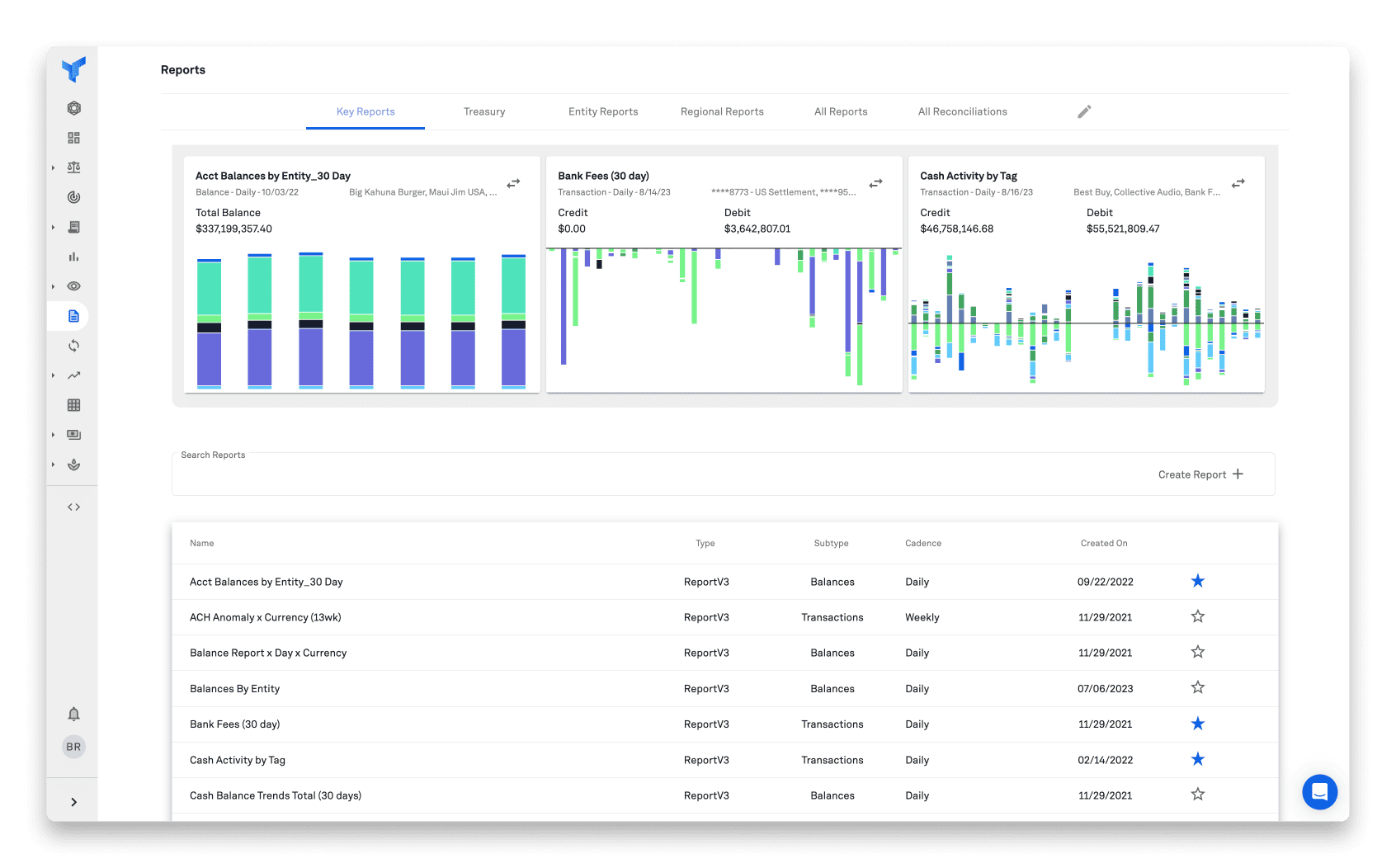
Leverage your integrated data to build predictive cash flow models that account for seasonality, payment terms, and market volatility. Use historical transaction patterns to forecast short-term liquidity needs and long-term capital requirements. This shift from descriptive to predictive analytics enables proactive treasury management, allowing you to optimize idle cash and mitigate funding risks before they impact operations.
Step 4: Monitor and Optimize Continuously
Treasury analytics is not a one-time setup. Establish regular review cycles to assess the accuracy of your forecasts and the efficiency of your liquidity management. Use dashboards to track key performance indicators (KPIs) such as cash conversion cycle days and forecast accuracy. Continuous monitoring ensures your strategy adapts to changing business conditions and regulatory requirements.
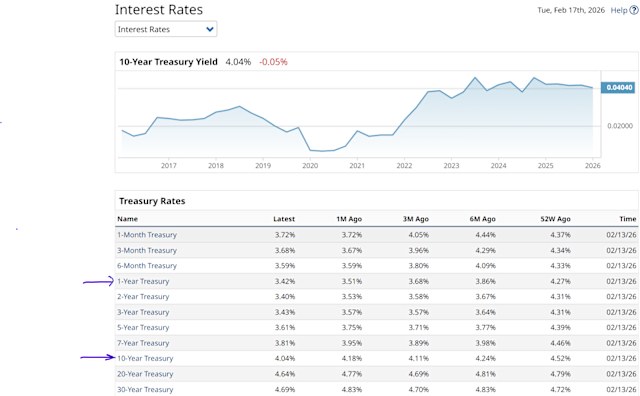
Implement automated dashboards that track key performance indicators (KPIs) such as cash conversion cycle days, forecast accuracy, and liquidity coverage ratios. Schedule monthly reviews to compare predicted cash positions against actual results, refining your models to improve precision. This continuous feedback loop ensures your treasury strategy remains agile and aligned with evolving business dynamics and regulatory standards.
Common questions on treasury analytics
Treasury analytics tools translate complex bond math into actionable signals. Understanding the Cheapest to Deliver (CTD) mechanic and system best practices helps finance leaders manage trade policy volatility and optimize working capital.
These analytics platforms, such as those provided by CME Group, allow users to visualize implied yields and deliverable baskets. By focusing on these core metrics, organizations can make data-driven financial decisions that support long-term stability.
No comments yet. Be the first to share your thoughts!